When Should You Increase Your Weights? A Practical Strength Training Guide
Nov 15, 2026
by Brad Lane
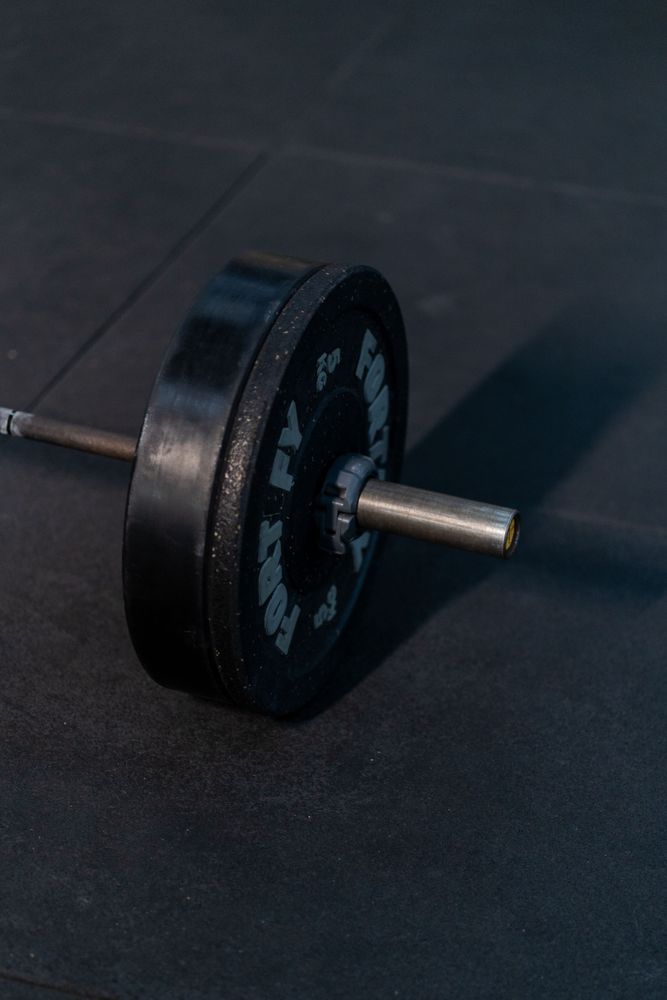
You have been strength training consistently, and the dumbbells that once felt challenging are starting to feel manageable. Does that mean it is time to lift heavier?
You may be ready to increase your weights when you can consistently complete your planned repetitions with controlled technique, an appropriate range of motion, and some effort remaining. But adding weight is not the only way to progress.
Sometimes improving your technique, completing more repetitions, or developing better control is the smarter next step.
Whether you are new to strength training or have been exercising for years, understanding when to increase resistance can help you train with more purpose.
💪 What Is Progressive Overload?
Progressive overload means gradually increasing the challenge placed on your muscles as your body adapts to training.
Imagine performing a dumbbell exercise with the same weight, repetitions, and sets for several months.
Initially, that workout might feel demanding. Over time, your body may become better at handling the exercise.
If your goal is to continue increasing strength, you may eventually need to adjust the challenge.
According to the American College of Sports Medicine's 2026 resistance training position stand, progressive overload can involve changing resistance, training volume, exercise selection, or other programming variables.
This does not mean every workout must be harder than the last.
Progression should be intentional, manageable, and appropriate to your experience.
Five Signs You May Be Ready to Lift Heavier
There is no universal number of workouts you must complete before increasing resistance.
Instead, look for several signs that your current weight is becoming manageable.
1. You Can Complete Your Planned Repetitions
Suppose your program calls for three sets of eight repetitions.
At first, you might struggle to complete all eight with controlled technique.
After several sessions, you can complete every set without losing control.
That improvement suggests your strength or exercise proficiency may be developing.
2. Your Technique Remains Consistent
Good movement quality should remain a priority as resistance increases.
For example, if you are performing a dumbbell squat, you should be able to maintain the movement pattern and range of motion appropriate for your body.
If adding weight causes you to rush, lose balance, or change your movement substantially, the increase may be premature.
Mayo Clinic's weight training guidance recommends using proper technique and reducing the load or repetitions when form deteriorates.
3. You Have Some Repetitions Left
One useful way to evaluate effort is to estimate how many additional repetitions you could complete with good technique.
Coaches often call this repetitions in reserve.
For example, you complete eight repetitions and believe you could perform another two with similar control.
That suggests you are working hard without necessarily reaching complete muscular failure.
The ACSM's 2026 review notes that training to momentary failure is not required for meaningful resistance training benefits.
4. The Same Weight Feels More Manageable
Your perception of effort can provide useful information.
If a weight previously required considerable concentration but now feels more controlled, you may be adapting.
However, one unusually easy session does not automatically mean you should increase resistance.
Look for consistency across multiple workouts.
5. You Are Recovering Adequately
Progress is not just about what happens during a workout.
Consider whether you can maintain your normal training schedule without persistent excessive fatigue.
If you are struggling to recover, sleeping poorly, or experiencing unusual discomfort, increasing the challenge may not be the best immediate decision.
🏋️ A Simple Method for Increasing Your Weights
One practical approach is to work within a planned repetition range.
For example, imagine your coach prescribes eight to twelve repetitions of a dumbbell exercise.
Here is how you might progress.
| Training stage | What happens | Possible next step |
|---|---|---|
| Starting out | Eight controlled repetitions feel challenging | Keep the same weight |
| Building consistency | You complete ten controlled repetitions | Continue practicing |
| Approaching the target | You complete twelve repetitions with good technique | Evaluate readiness |
| Ready for progression | Twelve repetitions are consistently manageable | Try a small weight increase |
| After increasing | You complete fewer repetitions within the planned range | Build back toward twelve |
This is a hypothetical example, not a universal prescription.
The appropriate weight increase depends on the exercise, equipment, training history, and individual response.
For some movements, the next available dumbbell may represent a substantial jump. A coach can help you decide whether that increase is reasonable or whether another progression would be more appropriate.
You Can Progress Without Adding More Weight
This is one of the most important lessons for people who are new to resistance training.
Progress is not always measured by the number printed on a dumbbell.
You might improve by:
-
Completing additional controlled repetitions within your planned range.
-
Improving movement technique.
-
Using a more consistent range of motion appropriate to the exercise.
-
Completing the prescribed sets more reliably.
-
Improving your ability to control the resistance.
-
Progressing to a more demanding exercise variation when appropriate.
For example, someone learning a bodyweight squat might benefit more from improving balance and movement consistency than immediately adding external resistance.
The ACSM's updated guidance emphasizes that different training methods can produce meaningful benefits and that complicated techniques are often unnecessary for general fitness.
The best progression is the one that matches your current abilities and goals.
When Should You Keep the Same Weight?
Increasing resistance is not always the right choice.
Consider maintaining or reducing your current load when:
-
You cannot complete the planned repetitions with acceptable technique.
-
You need excessive momentum to move the weight.
-
Your balance or control deteriorates.
-
You experience pain during the movement.
-
You are unusually fatigued or recovering poorly.
-
Your coach has intentionally programmed a lighter session.
Pain deserves particular attention.
Muscular effort and discomfort from exertion are not the same as sharp, persistent, or worsening pain.
If an exercise causes pain, stop rather than trying to push through it. Seek appropriate medical advice when symptoms warrant evaluation.
Why Different Exercises Progress at Different Speeds
You might increase resistance relatively quickly in one exercise while spending several weeks at the same weight in another.
That is normal.
A lower body movement may use substantially more total resistance than a small upper body isolation exercise.
Similarly, learning a technically demanding movement can require more practice before increasing the load.
You should not expect identical progression across every exercise.
A useful training plan considers the movement, the muscles involved, your experience, and your goals.
📋 Your Before You Increase Checklist
Before moving to a heavier weight, ask yourself:
☐ Can I complete the planned repetitions?
☐ Can I maintain controlled technique throughout the set?
☐ Am I using the intended range of motion?
☐ Have I performed the current weight successfully across multiple sessions?
☐ Does the current resistance feel manageable without being effortless?
☐ Am I recovering adequately between workouts?
☐ Is the next weight increase small enough to maintain good control?
☐ Would additional repetitions or technique practice be a better progression?
You do not need to answer every question perfectly to make progress.
The checklist is a way to evaluate readiness instead of increasing weight simply because someone nearby is lifting more.
How Coaching Helps You Progress
One challenge with strength training is that it can be difficult to evaluate your own technique while exercising.
A coach can observe movement quality, help select appropriate resistance, and adjust the program as you develop.
At It Starts Here Fitness in Warwick, Private and Semi-Private Personal Training includes customized programming based on fitness level, goals, and movement needs.
ISH's semi-private format allows a maximum of four clients per coach, while private training offers individualized attention and scheduling.
The gym also offers Group Fitness Classes, including strength training.
These options provide different coaching environments for people who want more structure while developing their strength.
Frequently Asked Questions
Should I increase my weights every week?
Not necessarily. Some people progress quickly when learning a new exercise, while others need more time. Your technique, training experience, recovery, and the size of the available weight increase matter more than following a fixed weekly schedule.
Is it better to add repetitions or increase weight?
Both can be useful. If your program uses a repetition range, adding controlled repetitions before increasing resistance is one practical approach. Your coach may choose a different method based on your goals.
Do I need to lift until I cannot complete another repetition?
No. The ACSM's 2026 evidence review found that training to momentary muscular failure is not necessary for meaningful strength and muscle development benefits.
What if the next dumbbell feels too heavy?
Stay with your current resistance and consider progressing through repetitions, technique, or another appropriate exercise variation. Ask a coach whether a smaller increase or different equipment is available.
How do I know if I am getting stronger?
You may notice that you can lift more weight, complete more repetitions with the same resistance, or perform an exercise with better control. Keeping a simple training record can make these changes easier to recognize.
Build Strength With a Plan, Not Guesswork
Getting stronger does not require adding more weight every time you walk into the gym.
It requires appropriate challenges, consistent practice, enough recovery, and a way to recognize when you are ready for the next step.
If you want help choosing exercises, evaluating technique, and progressing at a pace that fits your goals, explore Private and Semi-Private Personal Training at It Starts Here Fitness in Warwick, Rhode Island.
